EPA 2027 Emissions Standards:
What Every Truck Buyer Needs to Know
If you’re buying a new truck in 2027, the rules of the road are changing. The EPA is requiring a dramatic reduction in nitrogen oxide (NOx) emissions from all new heavy-duty engines — the biggest shift the trucking industry has seen in decades. Regardless of having one truck or one hundred trucks, this regulation will affect your new truck purchasing decisions in 2027.
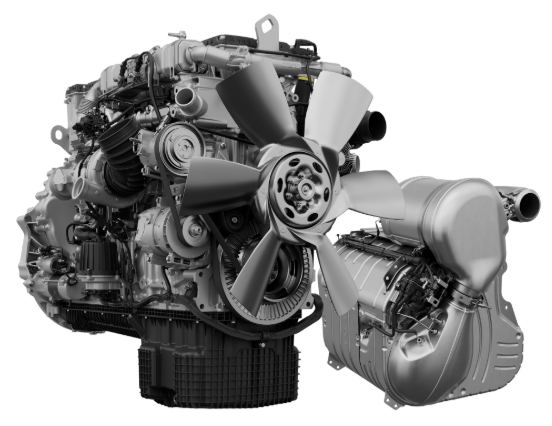
We’ve been closely tracking these changes at Lonestar Truck Group and TAG Truck Center so you don’t have to. Here’s what’s happening, what it means for your fleet, and what you should do right now.
What Is the EPA 2027 Emissions Rule?
The EPA 2027 regulation targets nitrogen oxide (NOx) emissions from heavy-duty diesel engines. The new standard reduces the allowable NOx output to just 0.035 grams per horsepower-hour — an 80% reduction from today’s standard of 0.2 g/HP-hr.
For perspective: In 2027, it will take more than 100 trucks to produce the same amount of NOx emissions as a single truck built in 1997.
As originally adopted, the rule also brought significant changes to emissions:
- NOx reduced from 0.2 to 0.035 g/HP-hr (~80% reduction)
- Particulate Matter reduced by approximately 50%
- EPA published proposed amendments to the rule in July 2026, but a final rule is still pending
In July 2026, the EPA proposed changes to how the 2027 rule is implemented. The 0.035 g/HP-hr NOx standard itself is not changing. What would change is the compliance framework around it: current warranty periods would carry forward instead of the extended ones, the longer useful-life requirements would be delayed, and manufacturers would get additional certification flexibility. The public comment period closed at the end of August 2026, and a final rule has not been issued yet.
Those proposed flexibilities matter to you for one practical reason: they are why engine manufacturers have started adjusting their 2027 launch plans, as Cummins did in July.
What’s Changing in the Engine Lineup?
To comply with EPA 2027, Daimler Truck North America (DTNA) — the parent company of Freightliner, Western Star, and Detroit — is updating its entire engine lineup. Several current engines are being replaced by next-generation products, though, as covered below, some legacy engines are now expected to stay in production longer than originally planned.
| 2026 Engine (Being Replaced) |
2027 Replacement |
Notes |
| Detroit DD5 |
B6.7 Diesel*, or B6.7 Octane |
Medium-duty replacement |
| Detroit DD8 |
Cummins L9 until July 1, 2027, ultimately to be replaced by the Cummins X10 |
Vocational/medium-duty replacement |
| Cummins B6.7 |
Cummins B6.7* (legacy engines) |
Replaced by Cummins B7.2 in CY 2028 |
| Cummins L9* |
Cummins X10 |
L9 expected to remain available until July 1, 2027 |
| Cummins X12* |
Cummins X10 / DD13 |
X12 expected to remain available until July 1, 2027 during transition |
| Cummins X15* (current) |
Cummins X15 (new HELM platform) |
Current X15 remains available during ramp |
Important note: Transitioning to new engines and aftertreatments can impact powertrain-related equipment such as PTOs, body mounting, and packaging. When selecting a 2027 engine, be sure to speak with a Truck Sales Representative to review horsepower, torque, transmission compatibility, weights, axle ratios, and your specific application.
*All legacy Cummins engines will be subject to a non-conforming penalty (NCP). Please contact your truck sales rep for more details.
New Detroit Engines for 2027
Detroit is launching next-generation versions of its flagship engines to meet EPA 2027 while improving fuel economy and performance. These are not entirely new platforms but build on proven technology that fleets and owner-operators already know and trust. More than 75% of new Detroit engines will remain the same, utilizing familiar technology while avoiding the complexity, cost, and uncertainty with other, more complex technology solutions.
2027 Compliance Pathways – Heavy Duty
| Detroit |
Launching new engine updates using known technology. |
| Paccar |
Carrying over MY26 Paccar and Cummins engines with penalties (NCPs). |
| Cummins |
Carrying over MY26 engines with penalties (NCPs) and launching 2027 X15 and X10 in Q3 2027, with limited quantities beginning in early 2027. |
| International |
Potentially using NCPs for S13 as of July 23, 2027. 2027 engine technology announced, and continuing with Cummins engines with penalties (NCPs). |
| Volvo | Mack |
Potentially using penalties (NCPs) for D13/D11 as of July 17, 2027. 2027 engine technology announced. |
| |
Fuel Economy / COS |
Engine Technologies for NOx Reduction |
Pre-SCR |
48V Heating System |
| Detroit |
✅ DEF+ |
Utilizing existing features |
✅ |
❌ |
| Paccar |
✅ |
Unknown |
❌ |
✅ |
| Cummins |
✅ |
Closed Crankcase Ventilation (CCV), Variable Valve Timing (VVT) |
❌ |
✅ |
| International |
❌ DEF++ |
Closed Crankcase Ventilation (CCV), Variable Valve Timing (VVT) |
✅ |
❌ |
| Volvo | Mack |
✅ |
Closed Crankcase Ventilation (CCV) |
❌ |
✅ |
2027 Emission Technology Strategies vary by OEM. Detroit has been delivering engines below the NOx standard for several years, lessening the number of new components added to the engine and aftertreatment system.
What’s New in Detroit 2027 Engines
- New fuel system and combustion strategy using Detroit’s Triple Front Combustion technology to maximize energy from burned fuel
- Optimized turbocharger with Thermal Control Valve for improved acceleration and broader performance range
- Added Pre-SCR system (controls NOx during warm-up) built on carryover aftertreatment technology
- Engine block optimized for higher compression without sacrificing reliability
- Service intervals remain unchanged despite meeting much stricter emissions
Detroit Engine Launch Timeline
- DD13 and DD15 Gen 6: Launch January 2027
- DD16 Gen 6: Launch January 2028 (current DD16 remains available in 2027)
New Cummins Engines for 2027
Cummins is taking a phased approach to the changeover. On July 23, 2026, Cummins announced an updated Model Year 2027 launch plan that uses the implementation flexibilities in the EPA’s proposed rule to ramp its new engines gradually instead of switching over all at once. The new X10 and X15 are part of Cummins’ fuel-agnostic HELM™ engine platforms.
What’s New in the Cummins HELM Platforms
- Fuel-agnostic platform architecture shared across the X10 and X15
- Improved fuel economy compared with current-generation engines
- Diesel exhaust fluid (DEF) consumption expected to be like today’s engines
- Built on decades of Cummins engine development, with field-tested reliability
Cummins Engine Launch Timeline
- X15 (Model Year 2027): limited production begins early 2027, ramping progressively to full production in Q4 2027
- X10 (Model Year 2027): production begins July 2027
- Next-generation B platform: launches January 2028, consistent with Cummins’ earlier announcement
- Timing varies by OEM, and actual availability follows each OEM’s individual launch plan
Legacy Cummins Engines Staying in Production
- Current-generation X15: expected to remain available while the new X15 ramps up
- Current X12 and L9: expected to remain available in truck and transit bus applications while the X10 ramps up
- Current B6.7: remains available through 2027, ahead of the new B platform in January 2028
For fleets, the phased ramp cuts both ways. Having current-generation engines available alongside the new platforms gives you more spec options in 2027 and softens the rating gaps created by the changeover. But early volumes of the new X10 and X15 will be limited, so if you want one of the new platforms in the first half of 2027, order timing matters more than usual.
Cummins has also been clear that this plan is based on EPA’s proposed rule, not a final one. If the final rule differs materially from the proposal — particularly on the transition provisions — product plans and timing could change again.
The Cummins B7.2 Delay: What It Means for You
One significant update: Cummins has informed DTNA that the B7.2 engine — originally planned as a 2027 replacement for the B6.7 and L9 — has been delayed to January 2028.
As a result:
- The current B6.7 engine and its aftertreatment will remain available through 2027
- The new X15 will begin limited production in January 2027, with full production later in the year
- The new X10 will begin production in July 2027
- A rating gap was expected for L9 specs in the 260–300 HP / 860 LB-FT range; with the L9 now expected to stay in production during the X10 ramp, that gap should be easier to work around early in 2027
- Once the L9 is phased out, buyers in that range will need to either down-spec to B6.7 or up-spec to the higher-output X10
Important Packaging Changes to Expect
The new aftertreatment systems required by EPA 2027 are larger and more complex than current systems. This will affect how trucks are specified and how upfit equipment is mounted.
For example:
- The Cummins X10 ATS on an M2 106 Plus extends the Back of Cab (BoC) by approximately 260 mm compared to the current L9 setup
- Higher torque X10 configurations (above 1,250 LB-FT) result in a 290 mm BoC extension
- On the 114SD Plus, the 2027 X10 ATS sits significantly lower and forward compared to the L9 system
- Detroit-powered trucks like the Western Star 49X maintain BoC clearance with a revised exhaust routing using dual vertical stacks
Weight differences also vary significantly by engine. Switching from a baseline B6.7 to an X10 on an M2 106 can add approximately 1,170 lbs. to the combined engine and aftertreatment system weight. Your Lonestar Truck Group and TAG Truck Center Truck Sales Representative can help you analyze the spec impact for your specific application.
Will Truck Prices Go Up?
Yes. Every previous emissions regulation has come with a price increase, and EPA 2027 will be no different.
Expect 2027-compliant trucks to cost more than today’s models due to larger aftertreatment systems, additional sensors and monitoring equipment, and upgraded electrical systems. Fleet managers should factor these cost increases into their planning for 2026 and beyond and speak with a Lonestar Truck Group and TAG Truck Center Truck Sales Representative for additional details.
Due to these technology changes, extended warranty pricing will increase in 2027.
Will My Existing Trucks Be Affected?
No. EPA 2027 applies only to newly manufactured trucks beginning in calendar year 2027. Trucks already in your fleet can continue operating normally and do not require any retrofits.
However, as your fleet ages, replacement decisions will increasingly involve 2027-compliant vehicles, making it smart to start planning those transitions now.
Plan Ahead
Industry analysts at ACT Research project that the full combined impact of tariffs, emissions changeovers, and market cycles will make 2026 a pivotal year. Fleet replacement demand is expected to accelerate in 2027–2028 as operators that delayed purchases come back into the market.
Calendar year 2026 production is closed for Daimler. Please contact your Lonestar Truck Group and TAG Truck Center truck sales representative for stock truck availability and to inquire for calendar year 2027 truck pricing and availability.
How Lonestar Truck Group and TAG Truck Center Can Help You Prepare
- Review your fleet replacement cycles and identify units due for replacement
- Evaluate whether to spec current-generation engines now or plan for 2027-compliant units
- Understand the rating changes and packaging impacts for your specific truck models and applications
- Time your 2027 orders around the phased engine ramp, including whether a current-generation engine still makes sense for your application
- Train your maintenance teams on the new aftertreatment systems coming in 2027 as well as new engine oil requirements
Our Truck Sales team at Lonestar Truck Group and TAG Truck Center is here to help you navigate these changes with confidence. Contact us today to start the conversation.